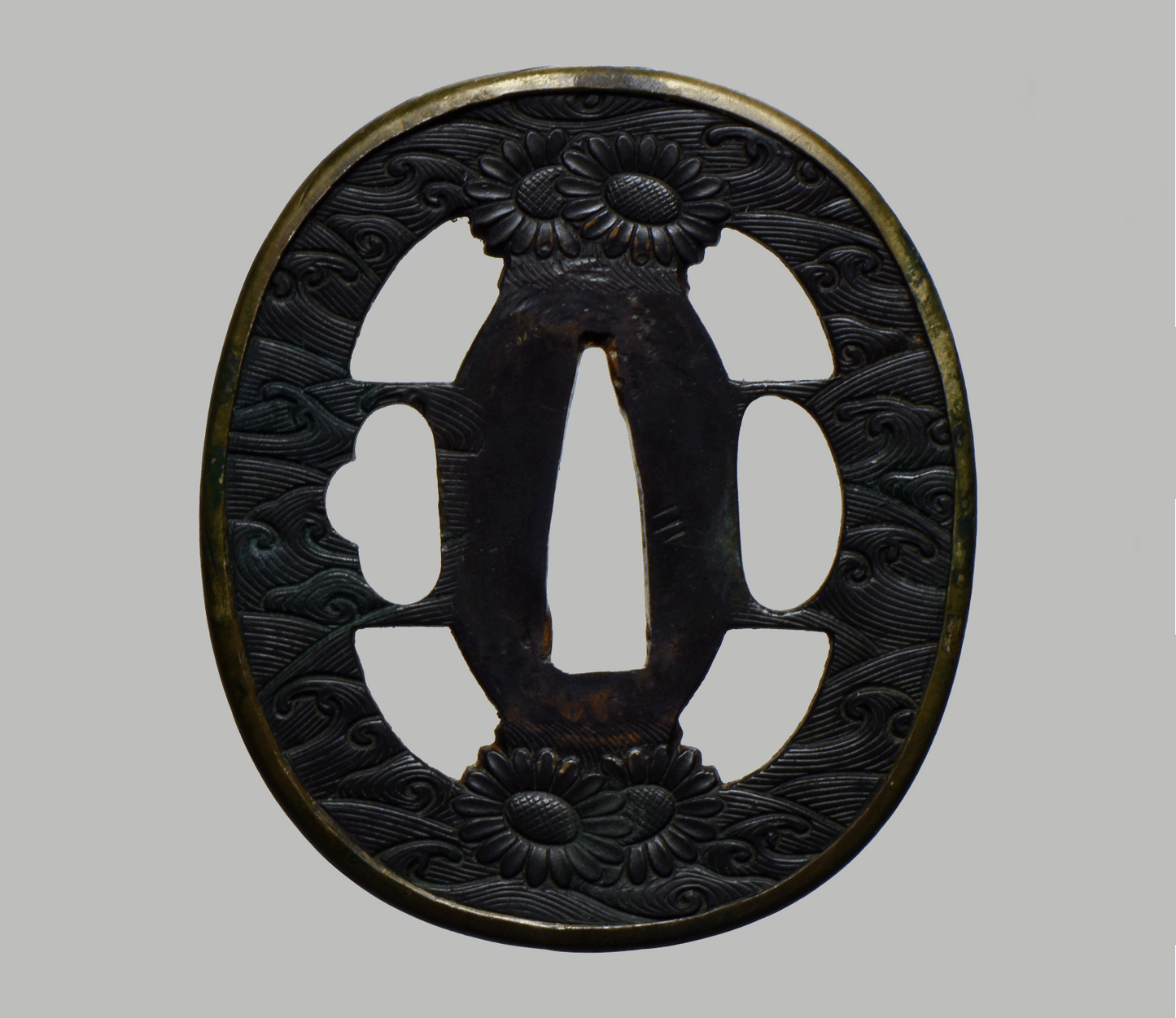
Tsuba - Edo Bushu Kinko Flowers, Nami (Waves) Shakudo Tsuba
Tsuba - Edo Bushu Kinko Flowers, Nami (Waves) Shakudo Tsuba
Couldn't load pickup availability
This oval Shakudo tsuba features a harmonious combination of openwork and richly engraved decoration, blending dynamic wave patterns with finely carved chrysanthemum blossoms. The broad sukashi openings to either side of the nakago-ana create a sense of balance and lightness, while the surrounding surface is filled with elegant, flowing waves rendered in controlled, confident linework. At both the top and bottom of the guard, chrysanthemum flowers are carved with careful attention to detail—the petals sharply defined, the centers textured in the classic dotted manner seen in Edo-period metalwork. The rim is enclosed by a thin, precisely fitted brass or copper-alloy fukurin, giving the piece a refined, finished appearance and reflecting technical skill.
Although floral motifs, waves, and mixed-metal rims can appear in various traditions, the style of this tsuba aligns far more closely with late Edo-period Bushū (Edo) school workmanship than with other possibilities. The carving is too controlled and sophisticated to fit the rustic, naïve boldness typical of Satsuma guards, which also tend to have heavier fukurin and less symmetry. Likewise, attribution to Ko-Kinkō is excluded: the Shakudo plate, later Edo wave carving, the openwork design, and the presence of a brass rim are all features far removed from the early soft-metal work of the Muromachi and Momoyama periods. The overall character—shakudo base, well-structured sukashi, chrysanthemum motifs, energetic yet disciplined wave patterns, and a clean fukurin—is consistent with the decorative tendencies of Bushū craftsmen active in the 18th and 19th centuries.
In summary, this tsuba represents a refined and expressive example of early to mid Edo Bushū/Edo-style ironwork, skillfully integrating symbolic motifs of longevity (chrysanthemums) and vitality (water) within a balanced, functional form.
Key points:
- Oval iron tsuba with sukashi openings and engraved wave patterns
- Chrysanthemum (kiku) motifs at top and bottom
- Thin, well-fitted brass/copper-alloy fukurin
- Stylistically consistent with early to mid Edo Bushū (Edo) school
Dimension 64,1 mm x 73,3 mm x 4,4 mm (4,7 mm) 101,6 g
Share