Kozuka Nara (most probably Yasuchika)
Kozuka Nara (most probably Yasuchika)
Couldn't load pickup availability
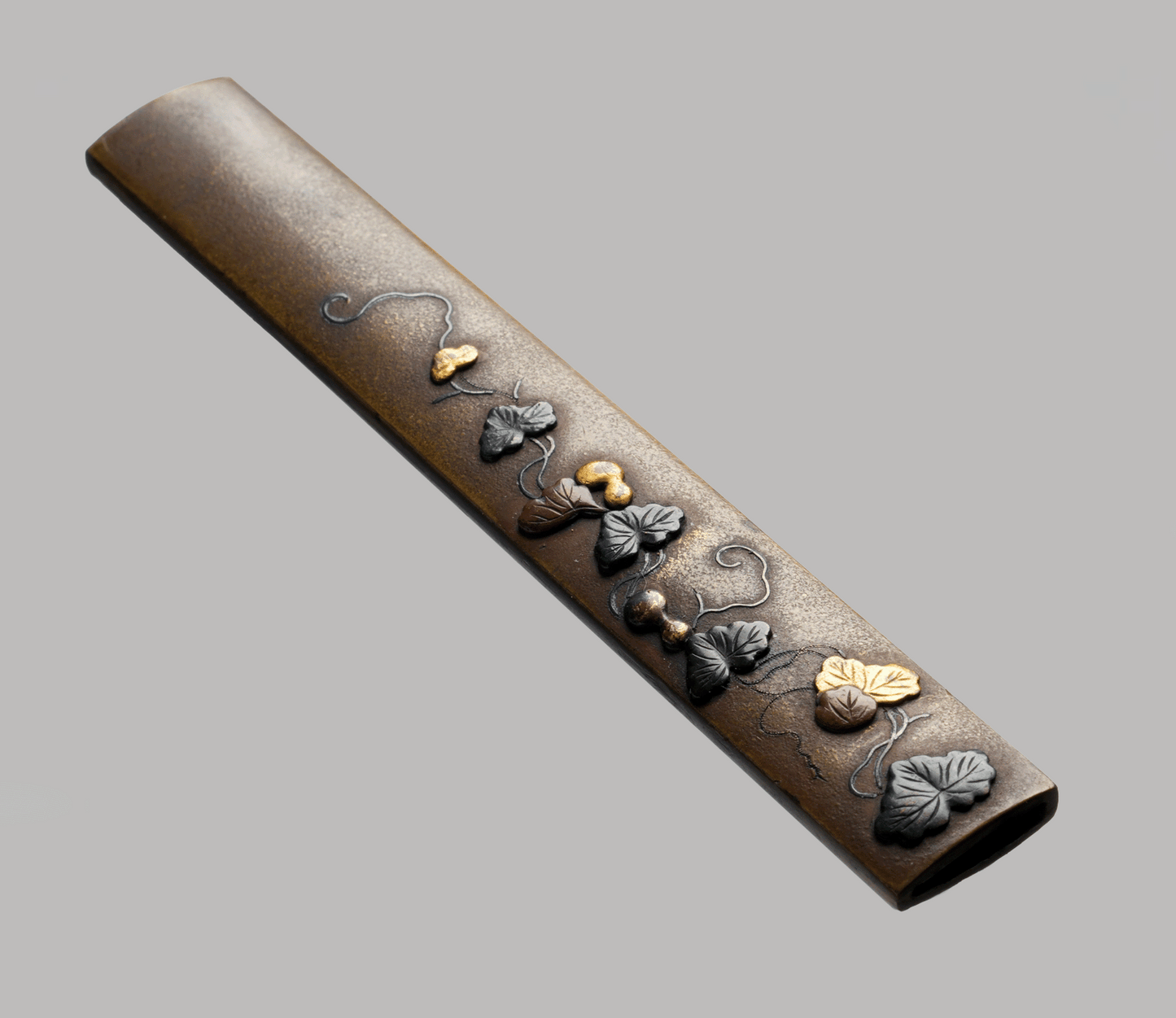
This Edo-period Kozuka was executed in sentoku with shakudō and gold details, reflecting the refined mixed-metal aesthetics associated with the Nara tradition, and in my opinion most plausibly the Yasuchika line. The decoration is unified by the continuous motif of gourd vines (hyōtan), rendered with confident relief modelling and an elegant sense of rhythm.
The warm, golden tone of the sentoku ground contrasts harmoniously with the deep blue-black shakudō leaves and the bright gold gourds. The carving is lively and naturalistic: curling tendrils flow across the surfaces in a measured, calligraphic movement, while leaf veins and transitions are indicated with subtle, controlled lines rather than excessive detail. The modelling remains crisp and three-dimensional, giving the fittings strong presence without appearing heavy.
In Japanese visual culture, the gourd is an auspicious symbol associated with abundance, good fortune, longevity, and protection. Its links to travelling monks and Daoist imagery add connotations of spiritual resilience and the containment of protective forces. The continuously branching vine reinforces this message through its sense of vitality and sustained growth—an especially appropriate theme for sword mountings.
From a kantei perspective, the use of sentoku, the carefully matured surface, the asymmetrical placement of motifs, and the expressive handling of mixed-metal accents correspond well to the stylistic vocabulary of mid- to late-Edo Nara work, particularly Yasuchika-influenced pieces. The relief modelling is confident, and the balance between ornament and open ground is handled with restraint—features that often distinguish the mainline Nara/Yasuchika taste from more provincial offshoots. In comparison, Shōnai work derived from Nara traditions tends to show flatter modelling and a more rustic simplification of plant motifs; the sophistication and balance seen here align more strongly with the Yasuchika tradition.
Overall, this fuchi–kashira pair represents a refined example of Edo-period Nara metalwork, centred on a powerful and auspicious hyōtan-vine theme and executed with the elegant technical assurance characteristic of the Yasuchika school.
Dimension
mm x mm x mm (Seppa) - mm (Mimi), g
Share